September is a transition month for Ottawa HVAC systems. One week your heat pump may still be cooling the home, and the next it may be handling cool mornings and overnight heating. That ability to move between cooling and heating is one of the advantages of a heat pump, but it also means the equipment can work through more of the year than a traditional air conditioner.
At AirZone HVAC Services, we recommend using the shoulder season to make sure a heat pump is ready for heating duty. A few homeowner checks, combined with professional maintenance when it is due, can help uncover problems before colder weather puts greater demand on the system.
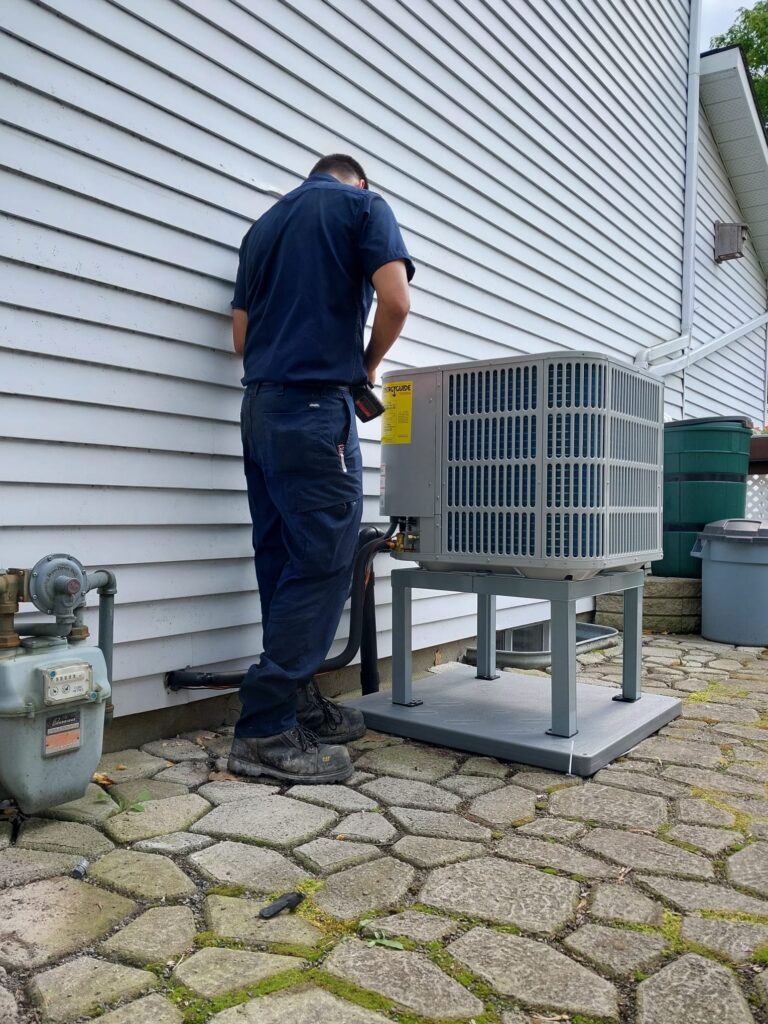
Do Not Shut the Heat Pump Down Just Because Summer Is Over
A heat pump is not simply an air conditioner that should be switched off at the end of summer. The same system can reverse operation and provide heating as outdoor temperatures fall.
If you have a cold-climate or hybrid heat pump system, the controls are designed to determine how the heat pump and backup heating equipment should work together. Homeowners generally should not cover the outdoor unit or manually disable it just because the furnace begins operating during colder conditions.
If you are unsure how your particular system is supposed to transition between heat pump and furnace operation, September is a good time to ask. Understanding the controls before winter makes the system much easier to live with.
Clear Leaves and Debris From the Outdoor Unit
Fall leaves can collect around outdoor equipment quickly. A heat pump needs open airflow around the coil and fan, so keep leaves, weeds, grass, and stored items away from the unit.
Do not wrap or permanently cover a heat pump that will operate during heating season. Unlike an air conditioner that may sit idle all winter, a heat pump needs access to outdoor air while it is heating the home.
Later in the season, snow should also be kept from building up around the unit. The outdoor coil needs space to exchange heat and the unit needs proper drainage during normal defrost cycles.
Check Filters and Indoor Airflow
Heat pump performance depends heavily on airflow. A clogged filter can reduce comfort and make the system work harder. Check the filter before heating season and replace it when needed according to the equipment and filter type.
If you have a ducted heat pump connected to a furnace or air handler, make sure supply vents and return grilles are open and unobstructed. If you have ductless equipment, clean the accessible indoor-head filters according to the manufacturer instructions.
Weak airflow, unusual odours, or a ductless head that looks visibly dirty may indicate that the system needs more than a basic homeowner cleaning.
Test Heating Before the First Cold Night
Do not wait until the house is uncomfortable to find out whether heating mode works. Choose a cool September morning, set the thermostat to heat, and give the system time to respond.
Heat pump supply air can feel different from the very hot air produced by a gas furnace. That does not automatically mean the system is malfunctioning. What matters is whether the heat pump can steadily warm the home and maintain the thermostat setting under appropriate conditions.
If the system runs but cannot raise the indoor temperature, produces an error code, trips a breaker, or repeatedly stops, arrange a diagnostic visit rather than continuing to reset it.
Review Thermostat and Hybrid-System Settings
Hybrid systems combine a heat pump with a furnace or other backup heat source. The thermostat or control system determines when each piece of equipment operates.
Those settings matter. If the furnace runs constantly during mild weather, the heat pump never seems to operate in heating mode, or the home becomes uncomfortable during equipment transitions, the controls may need to be reviewed.
Homeowners should avoid changing advanced balance-point or equipment-staging settings without understanding the system design. A properly configured hybrid system should coordinate the equipment automatically.
Some Frost Is Normal; Heavy Ice Is Not
During cold and damp weather, frost can form on an outdoor heat pump coil. The system is designed to periodically enter a defrost cycle to clear normal frost buildup.
A light coating that clears during normal operation is very different from an outdoor unit that becomes encased in heavy ice or stays frozen for long periods. Persistent ice can point to defrost, airflow, drainage, refrigerant, sensor, fan, or other operating problems.
If the unit develops heavy ice, do not chip at the coil with tools. That can damage the equipment. A system that is not defrosting normally should be professionally checked.
Ductless Heat Pumps Need Indoor-Head Attention Too
For ductless systems, the outdoor unit is only half of the maintenance picture. Each indoor head has filters, a coil, a blower wheel, and drainage components that affect airflow and comfort.
Homes with several ductless heads may need more maintenance time because every zone has its own indoor components. Bedrooms, basements, additions, and other frequently used zones can collect dust and buildup differently.
If a head has weak airflow, a musty odour, visible buildup, or water leakage, mention the specific zone when booking service. That information helps determine whether routine maintenance or deeper cleaning is more appropriate.
Maintenance and Repair Are Different Appointments
Heat pump maintenance is preventative care for equipment that is still operating. A fall service visit can review filters, accessible coils, outdoor unit condition, drainage, electrical components, controls, refrigerant performance, and heating operation where conditions allow.
If the system is not heating, is leaking water, repeatedly tripping a breaker, producing an error code, making a new mechanical noise, or developing heavy ice, book heat pump repair in Ottawa instead. An active failure needs diagnosis first.
That distinction is especially useful in September, when there is still time to resolve a concern before the system becomes an important part of daily heating.
Know What Your Heat Pump Is Expected to Do in Winter
Not every heat pump system is designed or configured the same way. Some Ottawa homes use a cold-climate heat pump as a major heating source. Others use a hybrid setup where the furnace takes a larger role as temperatures fall.
Equipment model, home heat loss, ductwork, thermostat setup, backup heat, and system design all affect how the system should operate. This is why a neighbour's settings or operating strategy may not be right for your home.
If you are still deciding how a heat pump should fit into your long-term heating plan, AirZone also provides information on cold-climate and hybrid heat pump options for Ottawa homes.
September Is an Ideal Time for the Heating Transition
The shoulder season gives homeowners a useful testing window. Clear the outdoor unit, check filters, confirm heating mode, and pay attention to how the controls manage the system. If professional maintenance is due, schedule it before the first sustained cold weather.
AirZone HVAC Services works with ducted, ductless, cold-climate, and hybrid heat pumps throughout Ottawa. A system that has been checked before winter has a better chance of moving smoothly from summer cooling into dependable fall and winter heating.


0 comments:
Post a Comment