The thermostat says the house has reached 21°C, yet the sofa feels like the coldest place in the room. Raising the setting may help for a while, but it leaves an important question unanswered: what temperature is the heating system actually responding to?
Start with the thermostat manual. Identify the requested temperature, the current reading and any symbol showing a call for heat. Photograph the display while the room feels uncomfortable. A target of 21°C does not establish that the air around the thermostat, or anywhere else in the home, has reached that temperature.
On some smart controls, the displayed reading combines more than one sensor. For example, ecobee explains that participating sensors contribute to a temperature average, and participation can change with the scheduled comfort setting. Check which rooms contribute before comparing the screen with a thermometer beside your chair.
Look at what surrounds the sensor
Walk past the thermostat at different times of day. Does afternoon sun reach it? Is there a nearby supply register, frequently opened exterior door or heat-producing appliance? Have you moved a lamp or installed shelving since the discomfort started?
Honeywell Home's installation guidance identifies direct sunlight, drafts, duct discharge and other local heat sources as influences to avoid. The correct position depends on the control and the home. Ask a technician to assess a suspect location rather than moving wiring or entering installer settings yourself.
Make a comparison that answers one question
If you already have a room thermometer, use it as a rough reference. Let it settle according to its instructions, away from direct sun and heat sources. Record its location and the time; a reading beside a cold window is different information from a reading in the middle of the occupied area.
Does the discrepancy occur all day or only during certain hours?
Is it one seating area, a whole room or most of the house?
Does it change when a door is normally open or closed?
Did it begin after a thermostat change, renovation or new schedule?
Use the observations to guide service
A consistently uncomfortable room deserves a wider assessment even when the thermostat reading is accurate. Ask the technician to distinguish a control or sensor issue from a room-comfort or air-distribution issue before recommending equipment.
For a system that is heating but needs its operation reviewed, AirZone's furnace service includes thermostat and comfort concerns. Tell the booking team if the home is actually losing heat so they can direct you to the appropriate diagnostic visit.
The useful outcome is a clear explanation of what the control measures and why the occupied room feels different. That gives any adjustment, repair or replacement a specific problem to solve.
Before choosing a heat pump for an Ottawa home, ask what the assessment will leave you with. A model number and an installed price are useful, but you also need to understand why that equipment fits the house and what work makes it possible.
These five records can make your conversation with a heat pump installer more productive. They need not arrive as a thick report. A clear summary, equipment data and an annotated layout can answer the questions that otherwise surface halfway through an installation.
1 Record the heating and cooling loads
Ask for the calculated heating and cooling requirements, the method used, and the indoor and outdoor design conditions. The old furnace rating or floor area alone does not describe what the home needs. Note whether the assessment reflects the house as it stands or includes planned insulation, window or air-sealing work.
Tell the assessor about an addition, finished basement or room that behaves differently from the rest of the house. Ask how that space was included. Natural Resources Canada’s homeowner guide explains why sizing should account for the climate, building loads and installation goals.
2 Match the equipment data to the heating plan
Keep the proposed outdoor-unit and indoor-equipment model numbers together. Ask the contractor to show how the selected combination’s available heating output compares with the home’s needs as outdoor temperatures fall. A minimum operating temperature does not establish that a unit can heat your entire house at that temperature.
The summary should also explain what provides heat when the heat pump cannot meet the load. If a furnace will remain, record how the equipment will be coordinated and what assumptions support that choice. NRCan’s sizing and selection toolkit includes a specifications worksheet that helps designers record these decisions.
3 Separate airflow findings from assumptions
For a ducted retrofit, ask how the required airflow was checked against the existing blower and duct system. Which findings are based on measurements, and which require further investigation? Have the contractor identify any proposed return-air, filter-cabinet or duct changes and explain the problem each change addresses.
NRCan notes that heat pumps generally require higher airflow than furnaces, so existing ducts deserve attention. That does not establish that your whole duct system needs replacement. Ask for the finding behind the recommendation. For a ductless layout, request a room-by-room explanation of which spaces each indoor unit is intended to serve.
4 Put the outdoor and electrical work on the layout
Walk through the proposed outdoor-unit location before agreeing to it. Mark the service space, manufacturer-required clearances, snow exposure and drainage route. Tell the contractor where roof runoff lands and where snow is normally piled. Ask how defrost water will be kept from creating an icing problem on a used walkway.
Include nearby bedroom windows and neighbouring properties in the discussion. The installer should review the location against Ottawa’s noise bylaw. Ask who is checking electrical capacity, what work is included and who handles any required notification. Ontario’s Electrical Safety Authority explains that a hired Licensed Electrical Contractor files the notification for their work.
5 Agree on the testing and handover record
Before installation day, ask what will be tested, recorded and explained after the equipment is connected. Request a handover that follows the selected manufacturer’s requirements, identifies the installed equipment and explains the controls, backup heating, filter care and maintenance access.
Keep that information with the manuals and warranty documents. Ask who you should contact if the system behaves differently from the explanation, and whether any testing needs a later visit because of outdoor conditions. This gives you a useful reference when heating season changes.
If an important item is still unknown, have it listed as a follow-up with a named person responsible. Confirm whether that finding could change the equipment choice, price or installation date. Resolving those open questions gives you a clearer basis for approving the work.
Keep any rebate paperwork separate from the technical assessment. Before accepting the quote, identify the program being relied on, its equipment requirements and any approval needed before purchase or installation. Keep written confirmation with the quoted model numbers, invoices and commissioning records. Our current Ottawa rebate guide explains the different program routes and which applications are open or closed. A contractor’s equipment assessment is not automatically the same as an EnerGuide evaluation or a program approval.
Bring your room-comfort notes and planned renovations to the assessment. AirZone’s heat pump installation service considers the home, equipment, airflow, electrical setup and outdoor placement together. The aim is to understand the proposed system well enough to make a considered decision before work begins.
On cool October mornings, an Ottawa hybrid system may heat the house with its heat pump, then bring on the furnace as outdoor temperatures fall or heating demand changes. That can be normal. An electric heat pump and a gas or propane furnace share the heating work according to the home's needs and the way the equipment is controlled.
The important question is why the change happens at that temperature. The answer involves heating capacity, running cost and the controls connecting the two appliances. The setting must work through autumn and colder winter weather; one generic temperature cannot suit every Ottawa home.
When the heat pump can no longer carry the heating load
As outdoor temperatures fall, your home needs more heat to maintain the same indoor temperature. Meanwhile, the heat pump's available output changes with outdoor conditions. The temperature where its heating capacity matches the home's heat loss is called the thermal balance point. Below that point, the heat pump alone cannot supply all the heat the house needs.
This is different from the manufacturer's lowest operating temperature. A unit may be permitted to run in very cold weather while producing less heat than your particular house requires. Its operating limit does not establish how far into an Ottawa winter it can heat the whole home by itself.
A sound design compares a current heat-loss calculation with cold-weather performance data for the installed outdoor unit and matched indoor equipment. The old furnace's size or the heat pump's nominal tonnage cannot answer that question. Insulation and air-sealing improvements can change the heating load, which is one reason two homes with similar equipment may need different changeover settings.
For a new hybrid system, this belongs in the heat pump installation design, alongside duct airflow, furnace compatibility and thermostat selection. Moving the switchover lower cannot create heating capacity the installed system does not have.
When the furnace costs less to run
A heat pump can still provide enough heat at a temperature where the furnace is less expensive to operate. That is the economic balance point, and it can differ from the thermal balance point. Prioritizing lower operating cost may therefore produce a different setting from prioritizing less furnace use.
The useful comparison is the cost of delivered heat. For a heat pump, the electricity price is divided by its coefficient of performance, or COP. A COP of three means the heat pump delivers three units of heat for each unit of electricity it uses. For the furnace, fuel cost must be converted to the same energy unit and adjusted for furnace efficiency.
The calculation needs current bills and the heat pump's performance at the temperatures being considered. A seasonal efficiency rating cannot replace that temperature-specific data. Consumption-based delivery charges and applicable taxes matter; fixed monthly charges that remain either way should be kept separate.
Natural Resources Canada's sizing and selection guide also explains how time-of-use electricity prices can change an economic switchover point. A fixed threshold can be a practical control strategy, but it cannot guarantee the cheapest heat during every rate period.
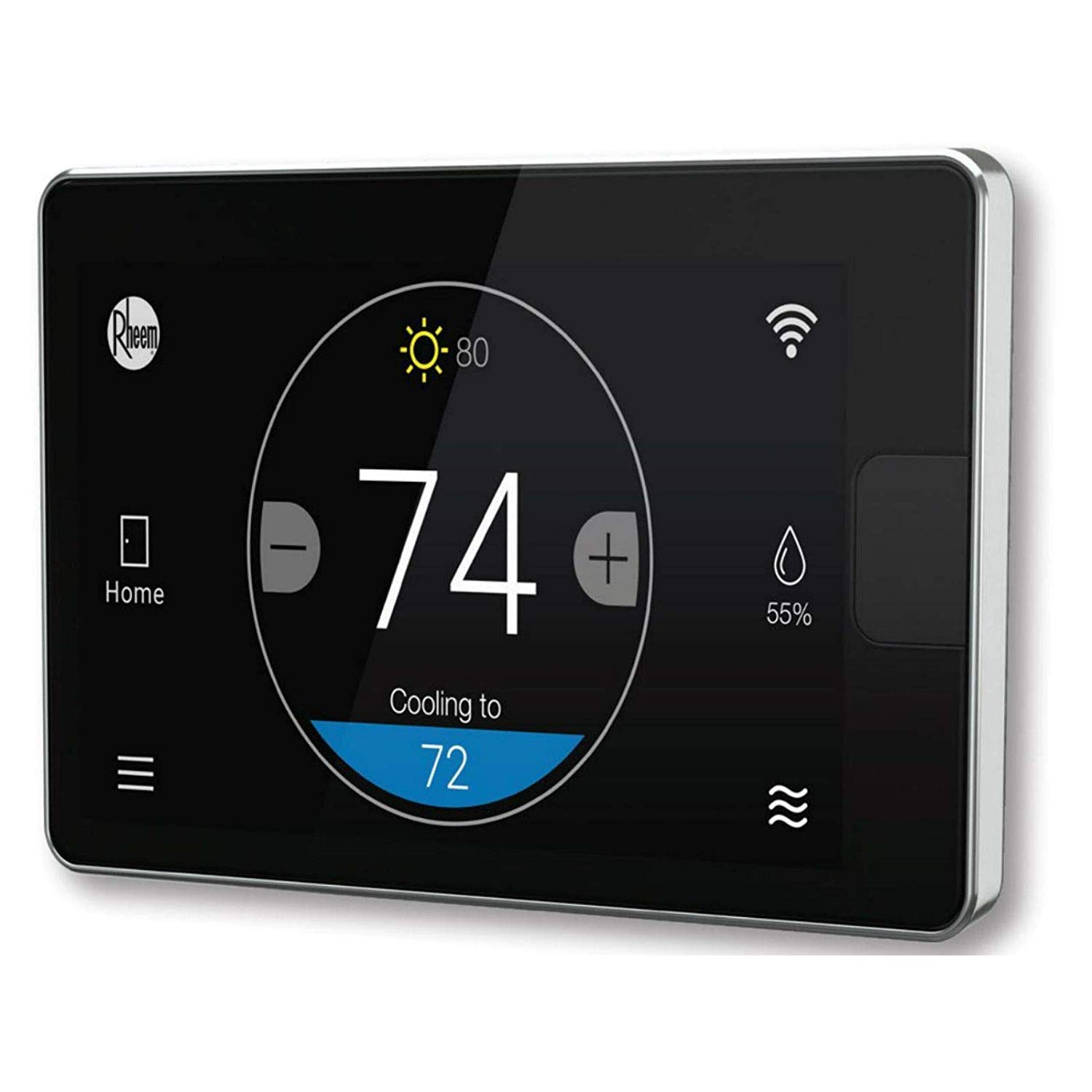
Rheem EcoNet thermostat. Display settings are illustrative, not a recommended switchover temperature. Image: AirZone HVAC Services.
Why the thermostat may bring the furnace on sooner
Outdoor temperature is only part of the control sequence. An inaccurate outdoor-temperature reading can affect the decision too. Depending on the system, the thermostat may also respond to how far the room temperature is below the setpoint and how long the equipment has been running. A large increase in the requested temperature, including recovery from an overnight setback, may call for furnace heat even when the heat pump would normally maintain the house on its own. If furnace use clusters around morning recovery, the schedule and staging deserve review first.
There can also be a deliberate pause between heat sources. For example, the Bosch BCC100 controls guide describes separate outdoor changeover, delay and staging settings. Those features illustrate why a thermostat default is not a complete heating strategy; other controls have their own operating logic.
Defrost is another temporary change in operation. An air-source heat pump uses defrost cycles to remove frost from its outdoor coil. What happens indoors during that cycle, including fan and backup-heat operation, depends on the equipment and its approved sequence. The installer needs to confirm whether one heat source must stop before the other starts, using the instructions for that exact equipment combination. Settings copied from another home may not suit your system.
Normal changeover or a heating problem?
Heat pump air may feel less hot than furnace air, and longer heating cycles can be normal. If the house holds its set temperature and the system follows its intended sequence, furnace operation by itself does not establish a fault. Light outdoor frost that clears during defrost can also be expected.
A diagnostic visit is warranted when you notice:
The indoor temperature keeps falling despite a call for heat
Heavy ice remains on the outdoor unit or heating repeatedly stops
Error codes, repeated breaker trips or a sudden, unexplained change in operation
For an operating system whose changeover needs review, AirZone's heat pump service covers thermostat staging, backup heat and balance-point settings. If the system is failing to heat, book a heat pump repair diagnostic so we can identify the cause before recommending an adjustment or repair.
Tell us when the change occurs and whether it follows a schedule adjustment. We can review the equipment and controls, explain when each heat source should run, and confirm whether the system is doing what your Ottawa home needs.